:focal(700x527:701x528)/https://tf-cmsv2-smithsonianmag-media.s3.amazonaws.com/filer_public/65/a4/65a4e851-0be0-496e-a976-03e0df605fc2/details.jpg)
The sun has set on another day and night is gathering. The chill wind from the north has fallen at last, and the West Wind is sweeping over the mountains from the distant Sea, scattering the low roof of cloud that veiled the sky since sunrise. Above, the stars are growing bright in the darkening sky, and my heart yearns to wander again under their glittering light, but I shall linger one last night behind the high walls of Thorin's Gate. For I deem it would be unwise to set forth when the moon is new; doubtless the light-loathing orcs will welcome the moonless night, and I would prefer not to meet them in the dark!
O stars that in the Sunless Year
With shining hand by her were sown,
In windy fields now bright and clear
We see your silver blossom blown!1
* * *
In the end, it was mischance that led me to dare the dwarven-halls at last, not a heart emboldened by the bright rays of the morning sun, as I had hoped. For my overnight roost in the green-house came to a sudden end when I was taken at daybreak by a pair of overeager dwarf-guards, for supposed trespass and spying! Both were dour and seemingly untried, and it was not, therefore, a merry morning awakening.
They led me unbound, but blindfold, for part of the way (which was almost a relief), until a dwarf-noble who called himself the "King's Voice" came upon us. Thorlák is his name, and he scornfully dismissed my captors and freed my eyes. I had girded myself for the disquiet I knew was to come, but still I was overwhelmed by the long wide hall. For to my dismay, the Hall of Kings was loftier and far longer than the entrance hall that had first overawed my woodland senses! Uneasily I followed Thorlák between the lines of stone-hewn pillars that upheld the lofty roof, far above my downcast head.
And at last I was brought before Thorin's Throne, the high seat of the bygone king of Durin's Folk. Now it seats the Steward of this realm, and Dáin Ironfoot rules the Longbeards from far-off Erebor, as King under the Mountain. The throne itself is indeed a 'high seat' for it looms grandly over any that stand before it: a pompous monument to the glory of dwarven craftsmanship, carved from the very roots of the towering Ered Lindon Luin above! Yet on each side, a narrow window of thick glass bathed us with soft green light, and I deem my ordeal must have dulled my wits, for the thought came not into my mind that no sun shone within the deep heart of the mountain!
Dwalin son of Fundin, Master of Thorin's Hall, is a proud old dwarf-lord, but a merry soul. And he is a hero among the Longbeard clan, chiefly for his part in the Quest of Erebor, a tale of renown among Durin's folk (or so it is said, for alas! I have yet to hear it told in full!)
The campfire tale that Athal told of the ruin of the Kingdom under the Mountain, by the great worm Smaug, took place well-nigh two hundred and fifty years ago; this new tale tells of when the dwarven-realm was retaken and the dragon slain, one hundred and seventy-three years afterwards. (And while seven and seventy years past may be deemed but lately in the long reckoning of Elves, it is still four and twenty years ere I was begotten!)
Dwalin told me much of his Dwarven-kin, but above all I learnt the truth of our childhood debate: dwarves do tear their beards! Though it is more a mark of grief and sorrow than of wrath, and thus my heart is smitten with shame when I remember our childish mirth, for Fethurin Faethurin and I both howled with laughter at the foolish picture we shared in our minds of an angry dwarf; though neither of us had ever beheld a hairy beard before, let alone a dwarf in the waking world!
However, while Faethurin thought it a true account, I deemed it fanciful storytelling. But I was mistaken for all those years, and Fethurin hit the mark when he called it a "strange mortal mourning-rite"! O, I wish he were here to meet the Dwarves at last, and revel in his victory!
* * *
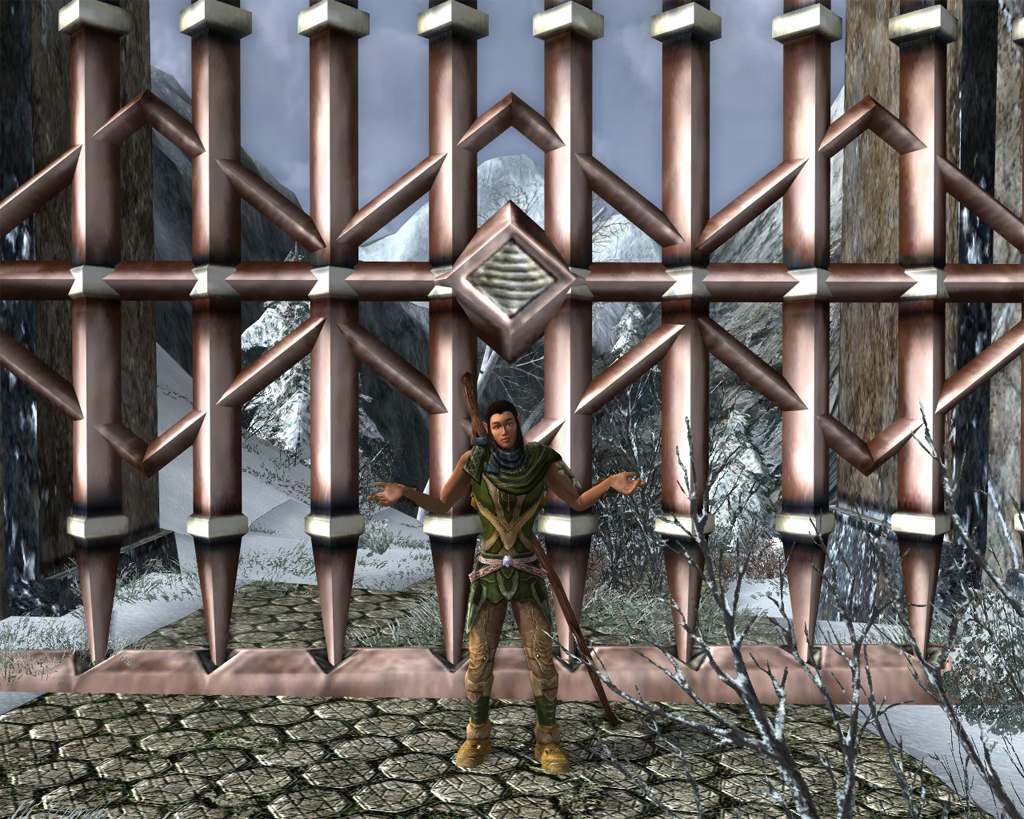
Two days have passed since I came to Thorin's Gate, days that I have spent exploring this wide snow-covered valley. To my delight I discovered a road beyond the Refuge of Edhelion leading to the north, but alas! the way is shut! It was my hope that it passed through the mountains to the Lhûn, whence I could cross eastwards to Nenuial. For there, it is said, Lord Celeborn and Lady Galadriel dwelt awhile, and among their varied host of followers were Lindi2 of Lindon, my kin.3 Thus I thought to search the country about Lake Evendim for any who may yet remain, though the Lord and Lady long ago removed to Eregion.
But little news has passed over Emyn Uial in a thousand years, and my heart misgives me, for to my mind it seems that Elves no longer dwell in the Northern world, and I wonder if my road thither is needless. But I need not decide my course ere I retrace my steps to Duillond. 'My feet follow wherever fate may lead them,' I told Dwalin when we met, and deep in my heart I deem the path I shall tread is already laid before them, though I do not see it.4
Whatever betides, the counsel of the dwarf-lord is ever in my thought: 'Do not go alone! Take such friends as are trusty and willing.' Gwedal and Glavror are both stout companions, but Dwalin told me that their company numbered fourteen on the Quest of Erebor; thus I wonder if three will suffice to brave the wilds of Eriador (though Gwedal insists he is large enough to count as two or three, but poor little Glavror wonders if he counts at all!)
* * *
Dwarves will speak long and eagerly of their history and their handiwork, but are less forthcoming with their lore. The King's Voice spread word of the Steward's decree that I was a welcome guest, yet in speech the dwarven jewel-wrights and healers eyed me with doubt and withheld the secrets of their arts. But I blame them not: why should they trust a strange and over-curious elf, already charged with spying (albeit falsely) by one of their own? Yet they were courteous, if not over-friendly, and I learnt much that will avail me upon my journey in the Westlands.
One sad lesson is that, unlike amongst Elves, food is not freely shared; indeed, it is not free at all! Save for guests or in times of dire need, it must be bought and paid for. But this is not soley on account of dwarven lust for coin,5 for I am told that this is common across all the mortal lands. Yet when first I learned of coin and payment, I deemed it was but for the handiwork of craftsmen or services rendered. Never did the thought cross my mind that folk needs must toil simply to eat, and it burns my heart that a price can be set upon the very fruits of Yavanna that are needful for the embodied to endure! If this great gift of the Queen of the Earth can be thus diminished, what else? Will they one day pay coin for the waters of Ulmo6 to slake their thirst? Or for the airs of Manwë Súlimo7 that they breathe?
Perhaps it is only to my woodland mind that this practice seems strange, for the only "payment" my kin make for provender is by aiding with the harvest on the lowlands of Harlindon; yet we do this not for reward, but to share the labour of our elven friends and neighbours, when autumn blows us westwards like leaves before the wind. Though we are given a small portion of the harvest and other fare, to tide us through the winter months, though this is not trade, but kindliness.
Well I remember how my heart misgave me when first I heard that folk oft must pay for the healing of their hurts and mortal ills. But now to my mind it seems that anything -- even the gifts of the Powers of Arda, made for the Children of Eru -- can be treated merely as things to be bought and sold. (And birds and beasts and trees, too, no doubt!) This seems to me an ill path for the world to tread, and I wonder if it is not a deceit of the Shadow in the East or perhaps a remnant of the malice of Belegurth.8
Indeed even now, I have but lately heard tell of "bankers" and "vault-keepers", who are paid for hoarding gold and treasures, and "money-lenders"9 who sell debt! The time of the Elves is over, and my people are leaving these shores;10 it grieves me that this is the world that shall flourish in our stead, for my heart forbodes that no good will come of it in the end!
*
In ages past, Durin's Folk willingly learnt the Elvish tongue, but in these latter days it seems that only dwarves who dwell alongside elven neighbours still do likewise.11 In Thorin's Gate, Annúnaid, the Common Speech, is chiefly spoken with outsiders,12 thus I have grown better somewhat in my speech thereof, in readiness for the lands beyond the Lhûn. Yet it would lighten my heart to once more hearken to the fair woodland tongue of my own people, for it is too long since last I heard it sung beneath the sighing boughs of beech and oak and elm.
Snow-white! Snow-white! O Lady clear!
O Queen beyond the Western Seas!
O Light to us that wander here
Amid the world of woven trees!1
*
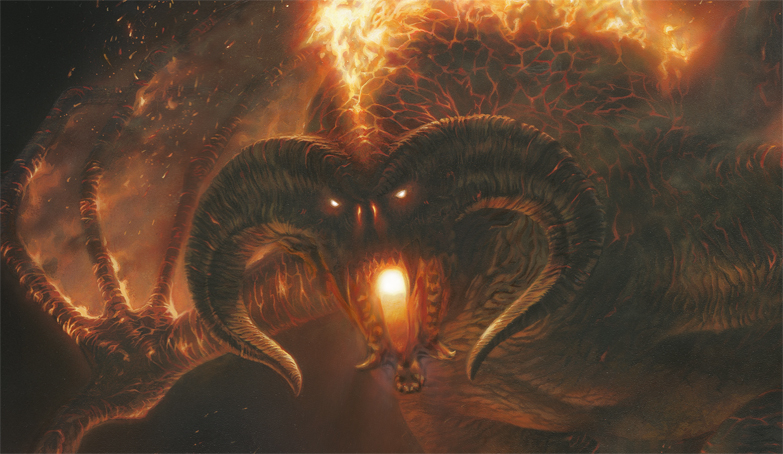
I learned also that the great dwarrow-citadel of Hadhodrond Khazad-dûm, which Dwalin called Moria in Elvish and spoke of with love and awe, fell to a great evil long ago that the Dwarves name "Durin's Bane" with dread, and will speak no more of it. But I am told it was first awakened a thousand years ago, and still it lived eight hundred years later at the Battle of Azanulbizar (which is named Nanduhirion in the elven-tongue) at the East-gate of Moria. After such a long count of years, I wonder if the secret memory of the Dwarves still recalls its true nature? And I wonder also what in Middle-earth it could be, and if it yet endures?
Nevertheless, I shall not pass that way!
* * *
1. The Fellowship of the Ring, "Three is Company"
2. "This name Danwaith they at first applied to the Nandor that came into Eastern Beleriand [Ossiriand]; but this people still called themselves by the old clan-name *Lindai, which had at that time taken the form Lindi in their tongue."
- The War of the Jewels, "Quendi and Eldar: The Clan-names [...]"
3. "When they entered that region [Eriador] there were many Noldor in their following, together with Grey-elves and Green-elves; and for a while they dwelt in the country about Lake Nenuial (Evendim, north of the Shire). Celeborn and Galadriel came to be regarded as Lord and Lady of the Eldar in Eriador, including the wandering companies of Nandorin origin who had never passed west over Ered Lindon and come down into Ossiriand."
- Unfinished Tales, "The History of Galadriel and Celeborn", "Concerning Galadriel and Celeborn"
4. Shamelessly paraphrased from The Fellowship of the Ring, "Farewell to Lórien", with apologies to Lady Galadriel
5. “Dwarves are not heroes, but a calculating folk with a great idea of the value of money...”
- The Hobbit, "Inside Information"
7. Súlimo, Q. "Lord of the Breath of Arda"
8. "Melkor they called Morgoth 'the Black Enemy', refusing to use the Sindarin form of Melkor: Belegûr 'he that arises in might', save (but rarely) in a deliberately altered form Belegurth 'Great Death'."
- The Peoples of Middle-earth, "The Shibboleth of Fëanor"
(Feveren's kin delighted in this wordplay, and the jest became tradition.)
9. "Kings used to send for our smiths, and reward even the least skillful most richly. Fathers would beg us to take their sons as apprentices, and pay us handsomely, especially in food-supplies, which we never bothered to grow or find for ourselves. Altogether those were good days for us, and the poorest of us had money to spend and to lend, and leisure to make beautiful things just for the fun of it..."
- The Hobbit, "An Unexpected Party"
10. Apologies to Master Elrond
11. "But the Dwarves were swift to learn and indeed were more willing to learn the Elven-tongue than to teach their own to those of alien race."
- The Silmarillion, "Quenta Silmarillion: Of the Sindar"
12. "But in the Third Age close friendship still was found in many places between Men and Dwarves; and it was according to the nature of the Dwarves that, travelling and labouring and trading about the lands, as they did after the destruction of their ancient mansions, they should use the languages of Men among whom they dwelt."
- The Lord of the Rings, "Appendix E: Writing and Spelling"
 |
xxiii |
 |