Notice: With the Laurelin server shutting down, our website will soon reflect the Meriadoc name. You can still use the usual URL, or visit us at https://meriadocarchives.org/
Noss-e-Laegrim
| Website | |
|---|---|
| Founding date | Year of the Trees 1350, when Denethor, son of Denweg, led his host of Nandor into Ossiriand |
| Goal | To relish the world ere one day completing the Journey unto the Uttermost West |
| Main area of operations | Eryn Milbar, a greenwood in Harlindon |
| Kinship type | Elven |
| Friends/Allies | |
| Rivals/Enemies | (Elder Days) Morgoth Belegurth; "hewers of trees and hunters of beasts" (Latter days) None |
| Kinship status | Active (not recruiting) |
| Recruiting Officer(s) |
Background

.: Noss-e-Laegrim :.
Clan of the Green-elves
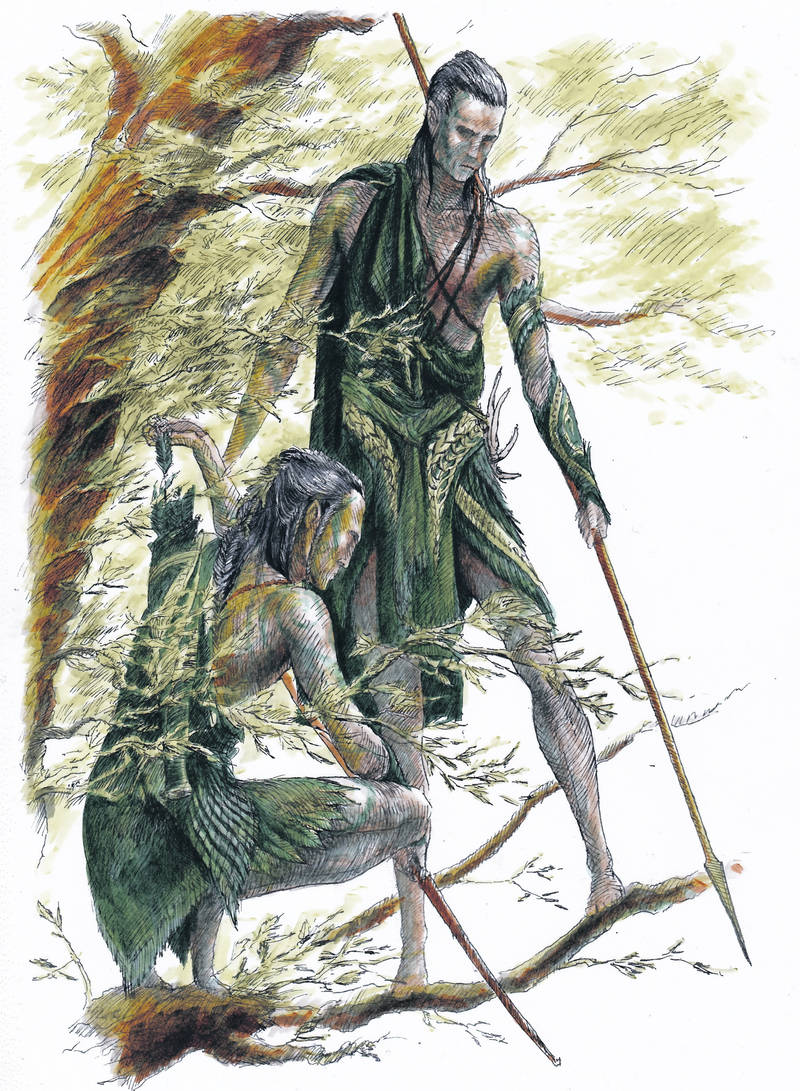
In that region the forests in after days were tall and green, and the people of Denethor there dwelt warily and seldom seen, because of their raiment of the colour of leaves; and they were called therefore the Green-elves.
- The War of the Jewels, "The Grey Annals: 1350 The Coming of Denethor"

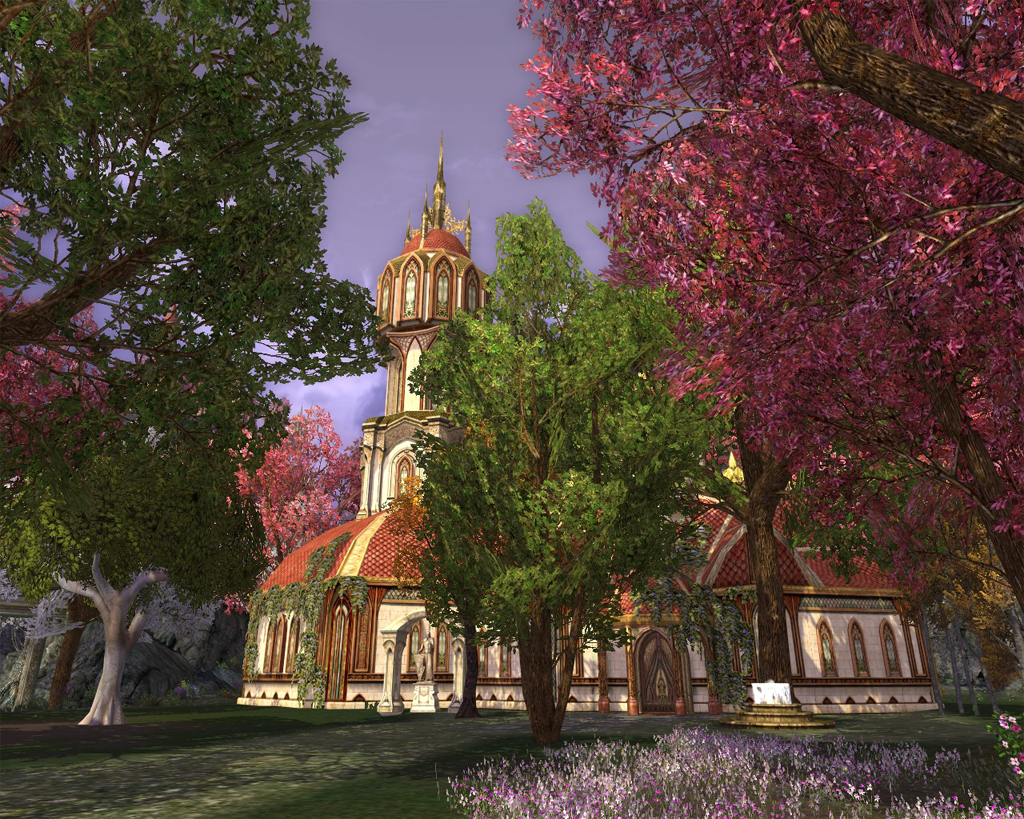
Nestled under the western eaves of snow-capped Southern Ered Luin lies the fair greenwood of Eryn Milbar, and amidst its singing groves of beech and oak and elm yet dwell a remnant of the Danwaith of Ossiriand.
In the Elder Days the forests of the Land of Seven Rivers were tall and green, and there dwelt the hidden folk of Denethor son of Denweg. They were light-armed and less wise than the Eldar of Beleriand, and though their magic was strong, even in those days they were wary. Thus to abet their woodcraft they garbed themselves in raiment the colour of leaves, and therefore they were named in Sindarin the Laegrim, the Green-elves, and the Laiquendi by the High Elves of the West (yet ever in their own tongue they called themselves the Lindi, the Singers.)
But after the tumult of the War of Wrath little remained of Beleriand save for Lindon, Land of Music, as it was named of old by the Laegrim; and while many of the Eldar heeded the summons of Eönwë to depart from Middle-earth, the last of the folk of Denethor there lingered in the land that is now called Harlindon.
In that great war the high walls of the Mountains of Lindon were broken and the Land of Seven Rivers was sundered by the Gulf of Lhûn, where before the Asgar had rushed down to meet mighty Gelion, the great river much beloved by Ulmo. By a new course the glittering Brilthor fell foaming from the mountain heights into the waters of a rippling mere, and upon its shores the Lindi made their abode and they named it Nen Echui in jest.
There they welcomed survivors of the deluge into their clan, Sindar and Abari alike, and now in their hearts the diverse elves of this intermingled tribe each deem themselves to be Green-elven kin. They are a merry people, carefree and glad of their wild woodland life, for to their minds the Shadow in the East is but a rumour and reaches not beyond the protection of high wall of Ered Lindon.
Yet it is their thought to one day complete the journey to the Uttermost West, though they are not overeager to forsake their beloved home in Middle-earth while the bliss of their secluded forest yet endures.


S. nos(s), (n.) “family, kindred, clan, house; race, tribe, people”.
S. Laegel, (pn.) "the Green Elves"; laeg “green” + Ell “Elf” (Q. Laiquendi).
Laegrim, (coll. pl.) laeg + rim (collective plural suffix)
Sindarin prepositions are complex, therefore the form for "of the" is taken from paeth e Ngolodhrim, "speech of the Noldor".
OOC
Kinships are groups of players that come together for a common, longterm purpose. The purpose could be purely social, to pool resources, to take care of new players, to share a common philosophy...
- LotRO Wiki, "Kinship"
Alas, the purpose of Noss-e-Laegrim is none of these. While it indeed exists as an in-game kinship, it was created long ago soley to access the kinship house storage space (and to deflect ninja invitations!) Also, the former restrictions that governed kinships have been loosened and folk can now form solo kinships with ease. Therefore, besides the chance to bear the character kin title Noss-e-Laegim, there's no actual benefit in joining (hence its "not recruiting" status.)
However, although Green-elves are renowned for their secrecy and wariness, they are kind-hearted; thus it is the thought of the clan to forgo their old distrust of strangers, and throw open the doors of their humble abode to any of the Free Peoples of the World who may wish to use their crafting facilities:
'Nen Echui', 5 Waterbank Road, Eryn Manadh, Falathlorn Homesteads
Eryn Manadh:
S. eryn n. “wood, forest”;
N. manadh n. “doom, final end, fate, fortune; final bliss”
(Alas, LotRO didn't have Eryn Milbar, but I deem this is close enough!)

: Laegrim Lore :
A collection of lore regarding the Green-elves, curated for convenience.
The Lindar
Now the Quendi loved all of Arda that they had yet seen, and green things that grew and the sun of summer were their delight; but nonetheless they were ever moved most in heart by the Stars, and the hours of twilight in clear weather, at 'morrowdim' and at 'even-dim', were the times of their greatest joy. For in those hours in the spring of the year they had first awakened to life in Arda. But the Lindar, above all the other Quendi, from their beginning were most in love with water, and sang before they could speak.
- The War of the Jewels, "Part Four. Quendi and Eldar"
* * *
Lindar (Teleri)
These were, as has been seen, much the largest of the ancient clans. The name, later appearing in Quenya form as Lindar (Telerin Lindai), is already referred to in the legend of 'The Awakening of the Quendi', which says of the Nelyar that 'they sang before they could speak with words'. The name *Linda is therefore clearly a derivative of the primitive stem *LIN (showing reinforcement of the medial N and adjectival ā). This stem was possibly one of the contributions of the Nelyar to Primitive Quendian, for it reflects their predilections and associations, and produces more derivatives in Lindarin tongues than in others. Its primary reference was to melodious or pleasing sound, but it also refers (especially in Lindarin) to water, the motions of which were always by the Lindar associated with vocal (Elvish) sound. The reinforcements, either medial lind- or initial glin-, glind-, were however almost solely used of musical, especially vocal, sounds produced with intent to please. It is thus to the love of the Nelyar for song, for vocal music with or without the use of articulate words, that the name Lindar originally referred; though they also loved water, and before the Separation never moved far from the lake and waterfall of Cuivienen, and those that moved into the West became enamoured of the Sea. (Note 14)
Note 14
For this reason the most frequently used of the 'titles' or secondary names of the Lindar was Nendili 'Water-lovers'.
- The War of the Jewels, "Quendi and Eldar",
* * *
The Nandor
The Nandor are the Host of Dân, the Wood-elves, the Wanderers, the Axe-elves, the Green Elves and the Brown, the Hidden People; and those that came at last to Ossiriand are the Elves of the Seven Rivers, the Singers Unseen, the Kingless, the Weaponless, and the Lost Folk, for they are now no more.
- Morgoth's Ring, "Of the Coming of the Elves"
* * *
Nandor
This name must have been made at the time, in the latter days of the March, when certain groups of the Teleri gave up the March; and it was especially applied to the large following of Lenwe, who refused to cross the Hithaeglir. The name was often interpreted as 'Those who go back'; but in fact none of the Nandor appear to have returned, or to have rejoined the Avari. Many remained and settled in lands that they had reached, especially beside the River Anduin; some turned aside and wandered southwards. There was, however, as was later seen, a slow drift westward of the Moriquendi during the captivity of Melkor, and eventually groups of the Nandor, coming through the Gap between the Hithaeglir and Eryd Nimrais, spread widely in Eriador. Some of these finally entered Beleriand, not long before the return of Morgoth. These were under the leadership of Denethor, son of Denweg, who became an ally of Elwë in the first battles with the creatures of Morgoth. The old name Nandor was however only remembered by the Ñoldorin historians in Aman; and they knew nothing of the later history of this folk, recalling only that the leader of the defection before the crossing of the dread Hithaeglir was named Lenwe (i.e.Denweg). The Sindarin loremasters remembered the Nandor as Danwaith, or by confusion with the name of their leaderDenwaith.
This name they at first applied to the Nandor that came into Eastern Beleriand; but this people still called themselves by the old clan-name *Lindai, which had at that time taken the form Lindi in their tongue. The country in which most of them eventually settled, as a small independent folk, they called Lindon (< *Lindana): this was the country at the western feet of the Blue Mountains (Eryd Luin), watered by the tributaries of the great River Gelion, and previously named by the SindarOssiriand, the Land of Seven Rivers. The Sindar quickly recognized the Lindi as kinsfolk of Lindarin origin (S Glinnil), using a tongue that in spite of great differences was still perceived to be akin to their own; and they adopted the names Lindi and Lindon, giving them the forms Lindil (sg. Lindel) or Lindedhil, and Lindon or Dor Lindon. In Exilic Quenya the forms used (derived from the Sindar or direct from the Nandor) were Lindi and Lindon (or Lindóne). The Exiled Noldor also usually referred to the Eryd Luin as Eryd Lindon, since the highest parts of that range made the eastern borders of the country of Lindon.
These names were however later replaced among the Sindar by the name 'Green-elves', at least as far as the inhabitants of Ossiriand were concerned; for they withdrew themselves and took as little part in the strife with Morgoth as they could. This name, S Laegel, pl. Laegil, class-plural Laegrim or Laegel(d)- rim, was given both because of the greenness of the land of Lindon, and because the Laegrim clothed themselves in green as an aid to secrecy. This term the Noldor translated into Quenya Laiquendi; but it was not much used.
- The War of the Jewels, "Part Four. Quendi and Eldar: C. The Clan-names [...]"
* * *
Then one arose in the host of Olwë, which was ever the hindmost on the road; Lenwë he was called. He forsook the westward march, and led away a numerous people, southwards down the great river, and they passed out of the knowledge of their kin until long years were past. Those were the Nandor; and they became a people apart, unlike their kin, save that they loved water, and dwelt most beside falls and running streams. Greater knowledge they had of living things, tree and herb, bird and beast, than all
other Elves. In after years Denethor, son of Lenwë, turned again west at last, and led a part of that people over the mountains into Beleriand ere the rising of the Moon.
- Quenta Silmarillion, "Of the Coming of the Elves and the Captivity of Melkor"
* * *
1350
The coming of Denethor
§30 Now as is elsewhere recounted, one Dan of the host of Olwe forsook the march of the Eldar at that time when the Teleri were halted by the shores of the Great River upon the borders of the westlands of Middle-earth. And he led away a numerous people and went south down the river, and of the wanderings of that people, the Nandor, little is now known. Some, it is said, dwelt age-long in the woods of the Vale of the Great River, some came at last to the mouths of Anduin, and there dwelt by the Sea, and others passing by the White Mountains came north again and entered the wilderness of Eriador between Eryd Luin and the far Mountains of Mist. Now these were a woodland folk and had no weapons of metal, and the coming of the fell beasts of the North affrayed them sorely, as the Naugrim reported. Therefore Denethor, the son of Dan, hearing rumour of the might of Thingol and his majesty, and of the peace of his realm, gathered such host of his scattered folk as he could and led them over the mountains into Beleriand. There they were welcomed by Thingol, as kin long lost that return, and they dwelt in Ossiriand in the south of his kingdom. For it was a great country, and yet little peopled; and it was so named, the Land of Seven Rivers, because it lay between the mighty stream of Gelion and the mountains, from which there flowed into Gelion the swift rivers: Ascar, Thalos, Legolin, Brilthor, Duilwen, and Adurant. In that region the forests in after days were tall and green, and the people of Denethor there dwelt warily and seldom seen, because of their raiment of the colour of leaves; and they were called therefore the Green-elves.
§31 Of the long years of peace that followed after the coming of Denethor there is little tale; for though in this time Dairon the minstrel, it is said, who was the chief loremaster of the kingdom of Thingol, devised his Runes,* [added later in margin: Cirth] they were little used by the Sindar for the keeping of records, until the days of the War, and much that was held in memory has perished in the ruin of Doriath. Yet verily of bliss and glad life there is little to be said, ere it endeth; as works fair and wonderful, while still they endure for eyes to see, are their own record, and only when they are in peril or broken for ever do they pass into song. In Beleriand in those days the Elves walked, and the rivers flowed, and the stars shone, and the night-flowers gave forth their scents; and the beauty of Melian was as the noon, and the beauty of Luthien was as the dawn in spring. In Beleriand King Thingol upon his throne was as the sons of the Valar, whose power is at rest, whose joy is as an air that they breathe in all their days, whose thought flows in a tide untroubled from the heights to the deeps. In Beleriand still at whiles rode Orome the great, passing like a wind over the mountains, and the sound of his horn came down the leagues of the starlight, and the Elves feared him for the splendour of his countenance and the great noise of the onrush of Nahar; but when the Valaroma echoed in the hills, they knew well that all evil things were fled far away.
- The War of the Jewels, "The Grey Annals, 1350 The Coming of Denethor"
* * *
Now as has been told, one Lenwë of the host of Olwë forsook the march of the Eldar at that time when the Teleri were halted by the shores of the Great River upon the borders of the westlands of Middle-earth. Little is known of the wanderings of the Nandor, whom he led away down Anduin: some, it is said, dwelt age-long in the woods of the Vale of the Great River, some came at last to its mouths and there dwelt by the Sea, and yet others passing by Ered Nimrais, the White Mountains, came north again and entered the wilderness of Eriador between Ered Luin and the far Mountains of Mist. Now these were a woodland people and had no weapons of steel, and the coming of the fell beasts of the North filled them with great fear, as the Naugrim declared to King Thingol in Menegroth. Therefore Denethor, the son of Lenwë, hearing rumour of the might of Thingol and his majesty, and of the peace of his realm, gathered such host of his scattered people as he could, and led them over the mountains into Beleriand. There they were welcomed by Thingol, as kin long lost that return, and they dwelt in Ossiriand, the Land of Seven Rivers.
Of the long years of peace that followed after the coming of Denethor there is little tale.
- The Silmarillion, "Of the Sindar"
* * *
The Laegrim
In that region the forests in after days were tall and green, and the people of Denethor there dwelt warily and seldom seen, because of their raiment of the colour of leaves; and they were called therefore the Green-elves.
- The War of the Jewels, "The Grey Annals: 1350 The Coming of Denethor"
* * *
In Ossiriand dwelt the Green-elves, in the protection of their rivers; for after Sirion Ulmo loved Gelion above all the waters of the western world. The woodcraft of the Elves of Ossiriand was such that a stranger might pass through their land from end to end and see none of them. They were clad in green in spring and summer, and the sound of their singing could be heard even across the waters of Gelion; wherefore the Noldor named that country Lindon, the land of music, and the mountains beyond they named Ered Lindon, for they first saw them from Ossiriand.
- The Silmarillion, "Quenta Silmarillion: Of Beleriand and its Realms"
* * *
Of old the lord of Ossiriand was Denethor, friend of Thingol; but he was slain in battle when he marched to the aid of Thingol against Melko, in the days when the Orcs were first made and broke the starlit peace of Beleriand. Thereafter Doriath was fenced with enchantment, and many of the folk of Denethor removed to Doriath and mingled with the Elves of Thingol; but those that remained in Ossiriand had no king, and lived in the protection of their rivers. For after Sirion Ulmo loved Gelion above all the waters of the western world. But the woodcraft of the Elves of Ossiriand was such that a stranger might pass through their land from end to end and see none of them. They were clad mostly in green in spring and in summer,
and hence were called the Green-elves; and they delighted in song, and the sound of their singing could be heard even across the waters of Gelion, as if all their land was filled with choirs of birds whose fair voices had taken thought and meaning.
- The Lost Road and Other Writings, "Quenta Silmarillion"
* * *
§2 In a valley among the foothills of the Mountains, below the springs of Thalos, [Felagund] saw lights in the evening, and far off he heard the sound of song. At this he wondered much, for the Green-elves of that land lit no fires, and they did not sing by night.
[...]
§11 Now the Nandor, the Green-elves of Ossiriand, were troubled by the coming of Men, and when they heard that a lord of the Eldar from over the Sea was among them they sent messengers to Felagund. 'Lord,' they said, 'if you have power over these new-comers, bid them to return by the ways that they
came, or else to go forward. For we desire no strangers in this land to break the peace in which we live. And these folk are hewers of trees and hunters of beasts; therefore we are their unfriends, and if they will not depart we shall afflict them in all ways that we can.'
- The War of the Jewels, "Of the Coming of Men into the West and the Meeting of the Edain and the Eldar"
* * *
But the speech of the Green-elves in Ossiriand became somewhat estranged from that of their own kindred that remained east of Ered Lindon, being much affected by the tongue of Thingol's people. Yet they remained apart from the Telerian Ilkorins [Úmanyar] and remembered their kin beyond the mountains, with whom they had still some intercourse, and named themselves in common with these Danas. But they were called by others Green-elves, Laiquendi, because they loved the green wood, and green lands of fair waters; and the house of Denethor loved green above all colours, and the beech above all trees. They were allied with Thingol but not subject to him, until the return of Morgoth to the North, when after Denethor was slain many sought the protection of Thingol. But many dwelt still in Ossiriand, until the final ruin, and held to their own speech; and they were without a king, until Beren came unto them and they took him for lord. But their speech has now vanished from the earth, as have Beren and Luthien. Of their kindred that dwelt still east of the mountains few came into the history of Beleriand, and they remained in the Hither Lands after the ruin of the West in the great war, and have faded since or become merged among the Lembi [Avari]. Yet in the overthrow of Morgoth they were not without part, for they sent many of their warriors to answer the call of Fionwë [Eönwë].
- The Lost Road and Other Writings, "Valinor and Middle-Earth Before the Lord of the Rings, Quenta Silmarillion: Of the tongues of the Elves in Middle-earth."
* * *
The Wars of Beleriand
Now the Orcs that multiplied in the darkness of the earth grew strong and fell, and their dark lord filled them with a lust of ruin and death; and they issued from Angband’s gates under the clouds that Morgoth sent forth, and passed silently into the highlands of the north. Thence on a sudden a great army came into Beleriand and assailed King Thingol. Now in his wide realm many Elves wandered free in the wild, or dwelt at peace in small kindreds far sundered; and only about Menegroth in the midst of the land, and along the Falas in the country of the mariners, were there numerous peoples. But the Orcs came down upon either side of Menegroth, and from camps in the east between Celon and Gelion, and west in the plains between Sirion and Narog, they plundered far and wide; and Thingol was cut off from Círdan at Eglarest. Therefore he called upon Denethor; and the Elves came in force from Region beyond Aros and from Ossiriand, and fought the first battle in the Wars of Beleriand. And the eastern host of the Orcs was taken between the armies of the Eldar, north of the Andram and midway between Aros and Gelion, and there they were utterly defeated, and those that fled north from the great slaughter were waylaid by the axes of the Naugrim that issued from Mount Dolmed: few indeed returned to Angband.
But the victory of the Elves was dear-bought. For those of Ossiriand were light-armed, and no match for the Orcs, who were shod with iron and iron-shielded and bore great spears with broad blades; and Denethor was cut off and surrounded upon the hill of Amon Ereb. There he fell and all his nearest kin about him, before the host of Thingol could come to his aid. Bitterly though his fall was avenged, when Thingol came upon the rear of the Orcs and slew them in heaps, his people lamented him ever after and took no king again. After the battle some returned to Ossiriand, and their tidings filled the remnant of their people with great fear, so that thereafter they came never forth in open war, but kept themselves by wariness and secrecy; and they were called the Laiquendi, the Green-elves, because of their raiment of the colour of leaves. But many went north and entered the guarded realm of Thingol, and were merged with his people.
- The Silmarillion, "Of the Sindar"
* * *
§38 Therefore he called upon Denethor, and the Elves came in force from Region over Aros and from Ossiriand, and fought the first battle in the Wars of Beleriand. And the eastern host of the Orcs was taken between the armies of the Eldar, north of the Andram and midway between Aros and Gelion, and there they were utterly defeated, and those that fled north from the great slaughter were waylaid by the axes of the Naugrim that issued from Mount Dolmed: few indeed returned to Angband.
§39 But the victory of the Elves was dearbought. For the Elves of Ossiriand were light-armed, and no match for the Orcs, who were shod with iron and iron-shielded and bore great spears with broad blades. And Denethor was cut off and surrounded upon the hill of Amon Ereb; and there he fell and all his nearest kin about him, ere the host of Thingol could come to his aid. Bitterly though his fall was avenged, when Thingol came upon the rear of the Orcs and slew them aheaps, the Green-elves lamented him ever after and took no king again. After the battle some returned to Ossiriand, and their tidings filled the remnant of their folk with great fear, so that thereafter they came never forth in open war, but kept themselves by wariness and secrecy. And many went north and entered the guarded realm of Thingol and were merged with his folk.
- The War of the Jewels, "The Grey Annals, 1497"
* * *
And the Orcs took the fortress upon the west slopes of Mount Rerir, and ravaged all Thargelion, the land of Caranthir; and they defiled Lake Helevorn. Thence they passed over Gelion with fire and terror and came far into East Beleriand. Maglor joined Maedhros upon Himring; but Caranthir fled and joined the remnant of his people to the scattered folk of the hunters, Amrod and Amras, and they retreated and passed Ramdal in the south. Upon Amon Ereb they maintained a watch and some strength of war, and they had aid of the Green-elves; and the Orcs came not into Ossiriand, nor to Taur-im-Duinath and the wilds of the south.
- The Silmarillion, "Of the Ruin of Belerian and the Fall of Fingolfin"
* * *
Thus ended Nirnaeth Arnoediad, as the sun went down beyond the sea. Night fell in Hithlum, and there came a great storm of wind out of the West.
Great was the triumph of Morgoth, and his design was accomplished in a manner after his own heart; for Men took the lives of Men, and betrayed the Eldar, and fear and hatred were aroused among those that should have been united against him. From that day the hearts of the Elves were estranged from Men, save only those of the Three Houses of the Edain.
The realm of Fingon was no more; and the sons of Fëanor wandered as leaves before the wind. Their arms were scattered, and their league broken; and they took to a wild and woodland life beneath the feet of Ered Lindon, mingling with the Green-elves of Ossiriand, bereft of their power and glory of old.
- The Silmarillion, "Quenta Silmarillion: Of the Fifth Battle: Nirnaeth Arnoediad"
* * *
The Ruin of Doriath
Now word went swiftly among the Elves of Ossiriand that a great host of Dwarves bearing gear of war had come down out of the mountains and passed over Gelion at the Ford of Stones. These tidings came soon to Beren and Lúthien; and in that time also a messenger came to them out of Doriath telling of what had befallen there. Then Beren arose and left Tol Galen, and summoning to him Dior his son they went north to the River Ascar; and with them went many of the Green-elves of Ossiriand.
Thus it came to pass that when the Dwarves of Nogrod, returning from Menegroth with diminished host, came again to Sarn Athrad, they were assailed by unseen enemies; for as they climbed up Gelion’s banks
burdened with the spoils of Doriath, suddenly all the woods were filled with the sound of elven-horns, and shafts sped upon them from every side. There very many of the Dwarves were slain in the first onset; but some escaping from the ambush held together, and fled eastwards towards the mountains. And as they climbed the long slopes beneath Mount Dolmed there came forth the Shepherds of the Trees, and they drove the Dwarves into the shadowy woods of Ered Lindon: whence, it is said, came never one to climb the high passes that led to their homes.
- The Silmarillion, "Of the Ruin of Doriath"
* * *
There came a night of autumn, and when it grew late, one came and smote upon the doors of Menegroth, demanding admittance to the King.
He was a lord of the Green-elves hastening from Ossiriand, and the doorwards brought him to where Dior sat alone in his chamber; and there in silence he gave to the King a coffer, and took his leave. But in that coffer lay the Necklace of the Dwarves, wherein was set the Silmaril; and Dior looking upon it knew it for a sign that Beren Erchamion and Lúthien Tinúviel had died indeed, and gone where go the race of Men to a fate beyond the world.
- The Silmarillion, "Of the Ruin of Doriath"
* * *
Now not even Beren knew the tale of those myriad folk that followed his horn in the woods of Hisilome, and or ever the moon was high above the hills the host assembled in the glade of his abiding was very great, yet were they lightly armed and the most bore only knives and bows. "Yet," said Beren, "speed is that which now we need the most"; and certain Elves at his bidding fared like deer before him, seeking news of the march of the Dwarves and Indrafangs, but at dawn he followed at the head of the green Elves, and Tinuviel abode in the glade and wept unto herself for the death of Tinwelint, and Gwendelin also she mourned as dead.
- The Book of Lost Tales II, "The Nauglafring"
* * *
The War of Wrath and the Second Age
In the Great Battle and the tumults of the fall of Thangorodrim there were mighty convulsions in the earth, and Beleriand was broken and laid waste; and northward and westward many lands sank beneath the waters of the Great Sea. In the east, in Ossiriand, the walls of Ered Luin were broken, and a great gap was made in them towards the south, and a gulf of the sea flowed in. Into that gulf the River Lhûn fell by a new course, and it was called therefore the Gulf of Lhûn. That country had of old been named Lindon by the Noldor, and this name it bore thereafter; and many of the Eldar still dwelt there, lingering, unwilling yet to forsake Beleriand where they had fought and laboured long. Gil-galad son of Fingon was their king, and with him was Elrond Half-elven, son of Eärendil the Mariner and brother of Elros first king of Númenor.
- The Silmarillion, "Of the Rings of Power and the Third Age"
* * *
Others of the Eldar there were who crossed the mountains of Ered Luin in that age and passed into the inner lands. Many of these were Teleri, survivors of Doriath and Ossiriand; and they established realms among the Silvan Elves in woods and mountains far from the sea, for which nonetheless they ever yearned in their hearts.
- The Silmarillion, "Of the Rings of Power and the Third Age"
* * *
[Galadriel] did not go West at the Downfall of Melkor, but crossed Ered Lindon with Celeborn and came into Eriador. When they entered that region there were many Noldor in their following, together with Grey-elves and Green-elves; and for a while they dwelt in the country about Lake Nenuial...
- Unfinished Tales, "The History of Galadriel and Celeborn, Concerning Galadriel and Celeborn"
* * *
They (and other similar adventurers forgotten in the legends or only briefly named) came from Doriath after its ruin and had no desire to leave Middle Earth, nor to be merged with the other Sindar of Beleriand, dominated by the Noldorin exiles for whom the folk of Doriath had no great love. They wished indeed to become Silvan folk and return, as they said, to the simple life natural to the elves before the invitation of the Valar had disturbed it.
- Unfinished Tales, "The History of Galadriel and Celeborn, The Sindarin Princes of the Silvan Elves"