
Beannaithe's Quandary
I received no serious complaints from me daughters or grandkids. I took that as a sign that I could continue tellin' me bedtime stories about the strange lass named Beannaithe...
'Beannaithe would have liked to tell her mother, grandfather, or a cousin of her dream about Áine, but bein' unable to speak or write made it very difficult. She were doubtful that she'd be able to properly tell the story through her usual method of gestures and facial expressions. Perhaps they'd be able to understand if she made a few drawin's, too? Frustrated and confused, Beannaithe chose to let the matter rest.'
A few years passed very much the same as before. Beannaithe helped her grandfather with his work on the farm. She did not much care for it, but it were better, she thought, then cookin' and cleanin' inside with her mam and aunties.
Since Beannaithe's lad cousins couldn't best her in grapplin' or in fighin' with assorted farm tools, mostly hoes and rakes, they instead sought Beannaithe's help in their tussles with neighborin' lads. The cousins developed a reputation for bein' a rough and tumble lot, and lads that ought not be trifled with.
Takin' to heart the sayin' "That if ye can't lick 'em, join 'em", the cousins and the local lads formed a sort of lad mílíste ("militia") to defend Lyndelby should it be invaded by goblins. Observin' this, the adults decided that if the lads had enough spare time to form a gang, they had time enough for more chores. The hoes, rakes and other assorted farm tools returned to their proper usage.
The village blacksmith continued visitin' the farmer in the years followin' Fikta's passin'. He'd share local gossip in exchange for a pint or two of the farmer's brew.
The blacksmith would occasionally ask the farmer about his granddaughter Beannaithe, and how she were adaptin' to farm life. The blacksmith wouldn't directly ask whether Beannaithe would like to return to the forge, but dropped hints about needin' help and the like. He'd taken on a lad from the village as an apprentice, but complained that the lad were slow and clumsy.
Unbeknownst to anyone, Beannaithe continued to be haunted by her dreams. She occasionally dreamt of good folks livin' in peace and happiness, but more often she dreamt of fierce battles pittin' goblins and wargs against Dwarves or the strange yet beautiful Fair Folk. "Who were they?" she wondered, and "Why were they fightin'?".
Beannaithe also dreamt of battles between good and evil Big Folk. Some of the good folk wore green and brown, while others wore silver and black. They wielded bows and spears and swords of good-make. The evil folk wore red and black. They wielded horrible, cruel weapons that, despite appearin' awkward and cumbersome, were deadly nonetheless.'
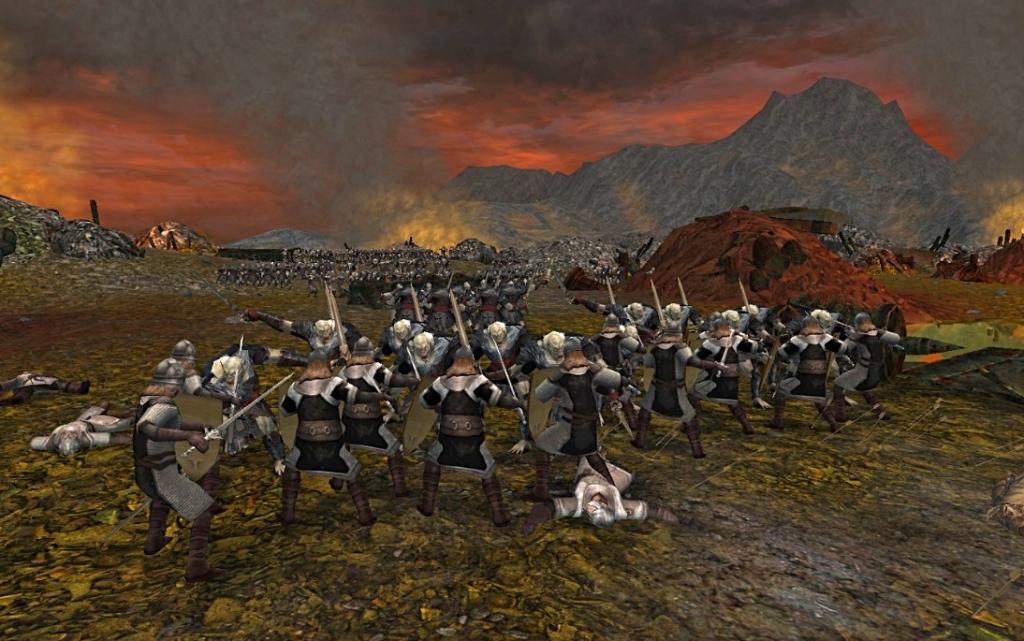
Just then I heard me daughters comin' from the kitchen chattin' merrily among themselves. This gave me a moment to change the topic of me story. They wouldn't at all like me talkin' 'bout wars and battles.
'...and so Beannaithe, bein' the good lass that she were, played nicely with her cousins, that is when they weren't helping their granda with his vegetable garden....'
Me daughters stopped and listened. I'm not certain they were convinced, they could be a suspicious lot when it came to me stories, but they said nothin' about it.
Me grandkids were confused for a moment, but when they saw their mams and aunties they knew what their old Granda were about. I gave 'em a wink for good measure.
'Oíche mhaith, me wee darlin's!' I says to me grandkids.
'Good night, Granda!' they says in return.
Me daughters returned to me after puttin' their wee ones to bed. They might've had a word with me, but I'd already fallen asleep in me rockin' chair. Or so I let them believe.


