The Herald Returns to the Ashlands
The Dead Marshes died behind her like a bad dream that had crawled into reality.
Ahead, heat rippled through the air, and the world turned iron-grey beneath a sun that seemed ashamed to shine.
The Black Gate — the Morannon — once the impenetrable maw of Mordor, now sagged like the corpse of a giant.
Its beams lay broken, scattered like the bones of some ancient beast. Rust ate through its iron ribs. The towers flanking it were half-collapsed, their watch-fires long extinguished.
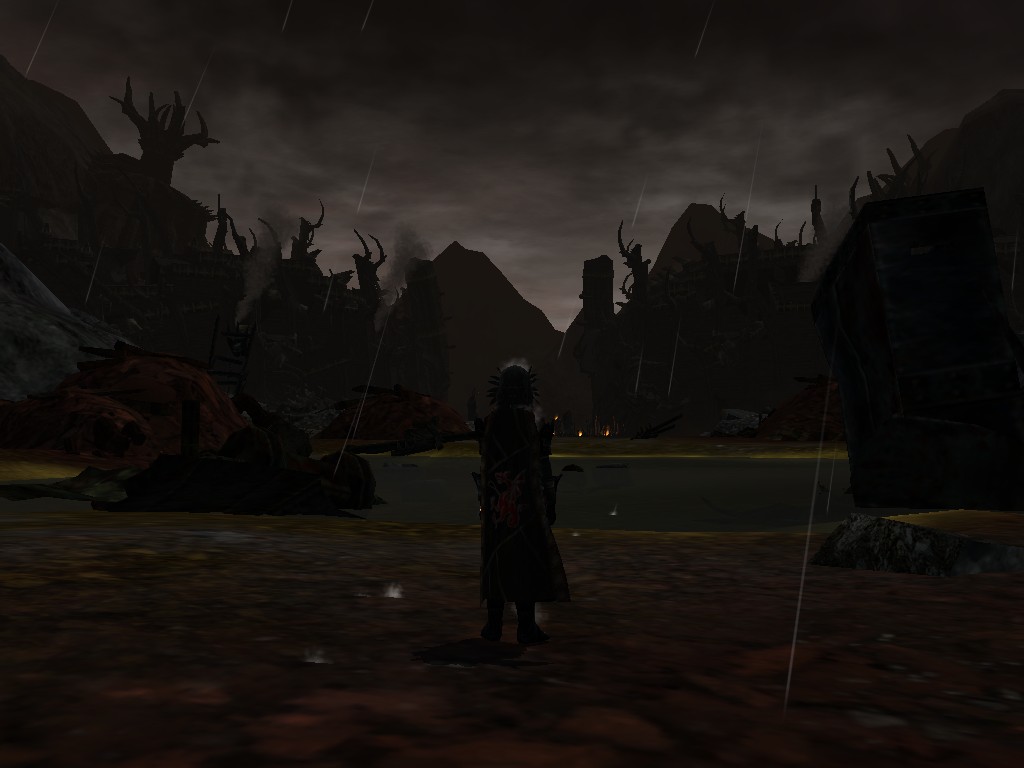
What had once been glorious in dread was now a ruin, humiliated, defiled by the daylight.
She ran her fingers across a torn plate of iron, feeling the warped dents left by the siege.
A memory surfaced — her last time through these gates, armored in black and silver, the Eye burning above Barad-dûr, her purpose sharp as a blade.
Now, only silence greeted her.
She stepped through.
And Mordor… welcomed her.
The ash smell hit her first.
Then the heat.
Then the sound — distant hammering, echoing screams, and the groans of beasts bred for war long abandoned by masters who would never return.
Udûn had changed… but it had not died.
Mountains loomed like black teeth around the valley of slag and fire. Steam huffed from cracks in the earth. Smoke rolled across the ground in choking waves. Towers that once flashed with crimson signal-fires now stood crooked, manned by whoever had survived the fall — fragments, scavengers, tribes desperate to carve territory out of ruins.
Deorla felt something like nostalgia.
The Hierarchy
It was not orcs who first noticed her return.
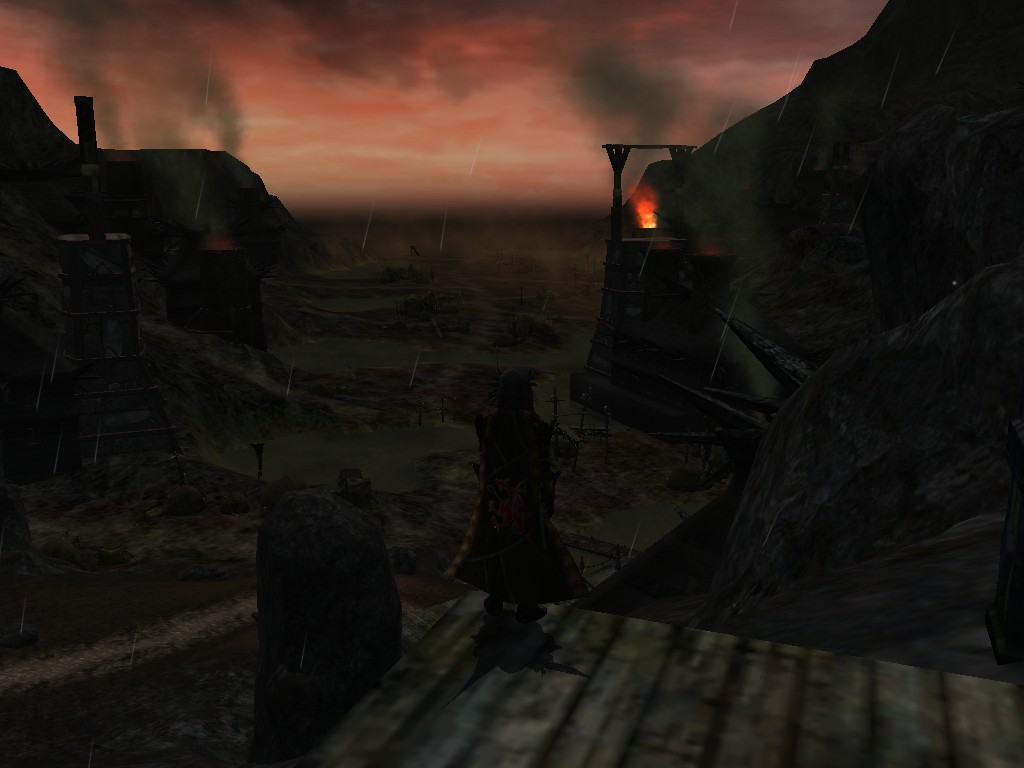
To the west of the gate’s shattered remains, tucked behind a ridge of basalt and ash, a small Gondorian outpost clung stubbornly to duty. Tattered banners bearing the White Tree fluttered weakly in the sour wind. There were only six soldiers, all gaunt, all exhausted, their armor patched, their faces hardened by fear rather than pride.
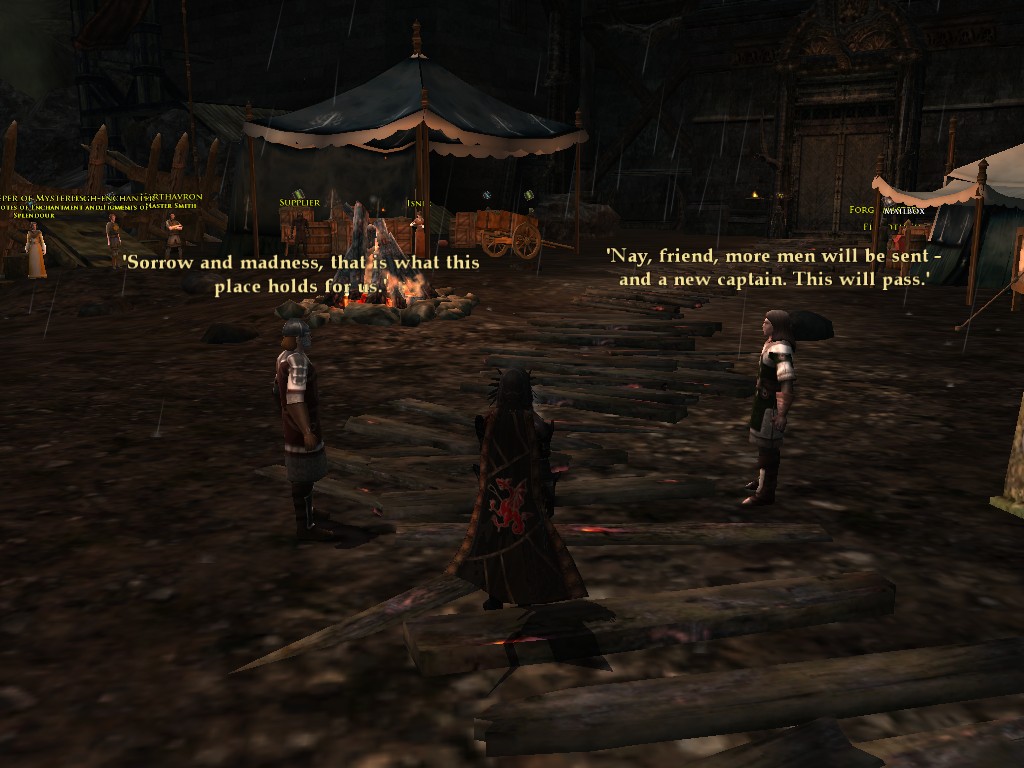
They spotted her silhouette rising from the ash like a memory of horror.
Hands went to spears.
A bowstring tightened.
“Identify yourself!” one shouted.
She lifted her hood only halfway. Enough to show she was no orc. Not enough to reveal anything else.
“I seek passage,” she said flatly.
The soldiers exchanged looks. Their sergeant, a young man whose helmet had clearly belonged to someone much older, stepped forward.
“You’re heading into Udûn? No one goes there willingly.”
“Then you have your miracle of the day.”
Her tone made them uneasy.
Good.
But they needed someone to speak to.
The sergeant gestured her into their ruined tent.
There was no hostility — only desperation.
Inside, the truth spilled quickly.
Their captain had vanished.
Gone into Udûn to map the new orc movements.
He never returned.
Orc attacks continued with unnatural organization.
Structured. Coordinated.
Not random raids… but controlled hunts.
The men were terrified.
“It’s like nothing changed,” one muttered.
“Like the war never ended. They attack in waves… same whistles, same war drums… same banners—”
Another soldier whispered,
“And sometimes… sometimes we hear voices. Like… like someone’s commandin’ them.”
Deorla hid her smirk.
Someone was commanding them.
She leaned forward.
“What name have you heard whispered?”
They hesitated.
One answered.
“…Ugrukhôr.”
The name slid into the tent like a blade.
Deorla’s pulse thrilled.
Ugrukhôr.
The Captain of the Pit.
The Iron Torturer.
Sauron’s executioner and master of the breeding pits.
She remembered him well — and he would remember her.
To the Gondorians, she simply nodded and stood.
“Your captain is dead,” she said coldly.
“Your outpost will fall within the week. Leave by dawn.”
They stared at her in fearful fascination.
She walked away without another word.
Behind her, one soldier whispered:
“Who was she?”
No one answered.
She descended into Udûn proper as night fell, the air shifting from hot to blistering.
Plumes of steam burst from the scorched earth. Old war forges glowed faintly, their fires somehow not yet extinguished.
And then came the tracks.
Fresh.
Orcish.
A patrol.
Sloppy… but numerous.
They found her first.
Six of them — underfed, scarred, twitchy. They circled her with dull knives and rusted swords.
The biggest reached for her shoulder.
She sliced his throat open with a motion so swift they barely saw the blade.
The others froze.
Something ancient stirred in their blood — submission.
Recognition.
Fear.
They knelt without knowing why.
“Good,” she said softly.
“Now you may be useful.”
Interrogation in the Tower of Smoke
She dragged three of them to a ruined watchtower — a place where screams once echoed nightly.
It would serve again.
The first orc hung upside-down until he babbled nonsense and died.
The second broke only after she carved the Eye symbol across his chest.
He spoke of tribe hierarchies, petty rivalries, scattered allegiances…
But the third gave her what she wanted.
“Ugrukhôr!” he shrieked.
“He still rules the pit!”
“He still commands the forges!”
“He—he’s rebuildin’ the ranks! The Howlers serve him! The Pale Brethren too! They all answer to him!”
Deorla felt cold delight bloom in her chest.
The Captain of the Pit had survived the fall of Sauron, and it seems he is working close with The Pale Herald, another of the key figures in Mordor
He had claimed Udûn.
And Mordor was not broken — merely waiting.
Still... before making a move I better scout all the regions of the Mordor and see how other are doing and if they are even alive. This will give me a good overview how to reclaim Mordor and who to use and who will be my enemy. Knowing Pale Herald and Captain of the Pit will go againts me, but perhaps others could prove more usefull.